The Importance of Experience, Expertise, Authority and Trust in Biotech Websites
In biotech, trust is never a secondary consideration. It’s the foundation of every meaningful business relationship, with investors, collaborators, research partners, clinicians, procurement teams and future employees. Your website is often the first place those audiences go to understand who you are, what you do, and whether they can believe in the science behind your innovation.
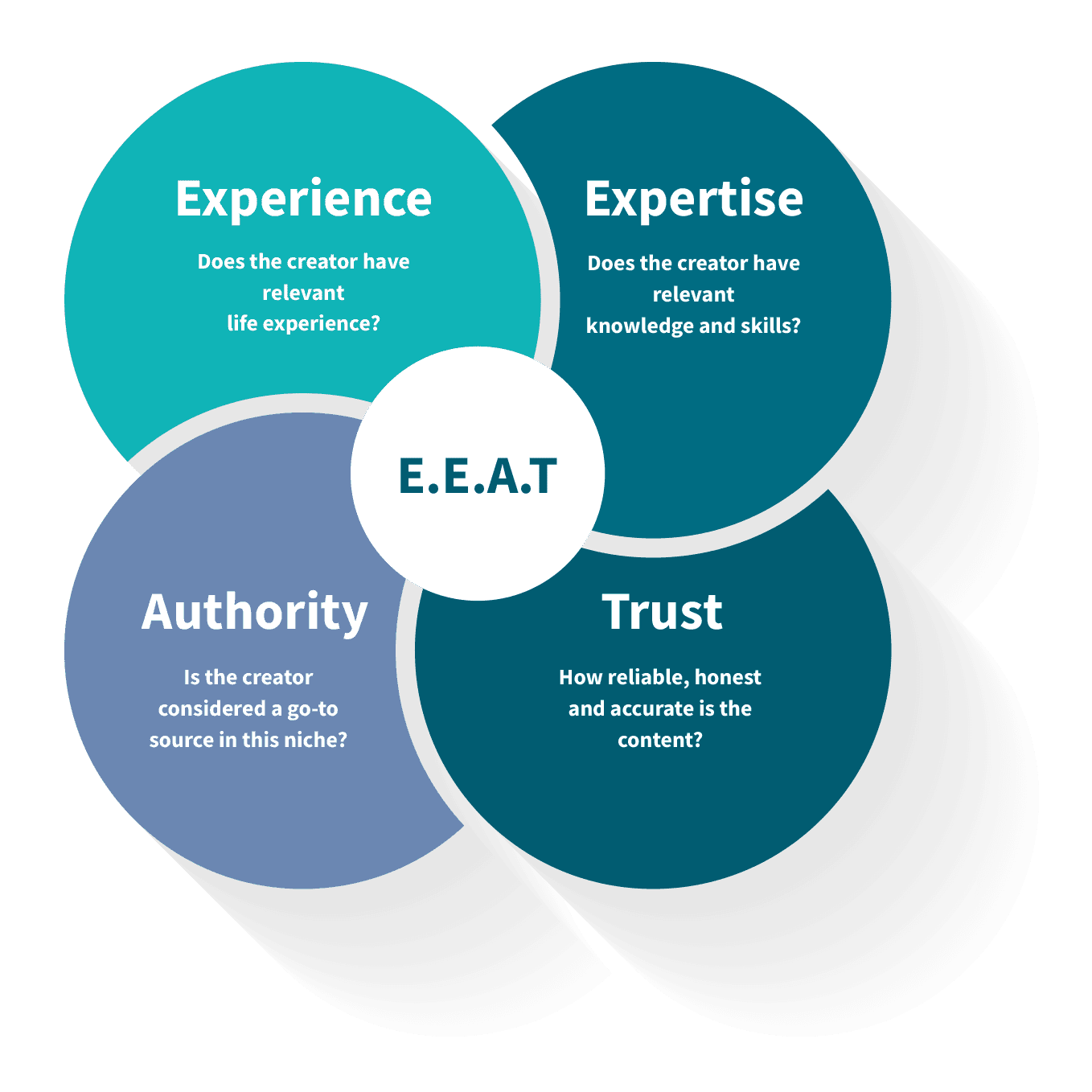
That means your biotech website needs to do more than look professional. It needs to communicate experience, expertise, authority and trust (E.E.A.T) with clarity, confidence and care.

Google’s own guidance around helpful, reliable, people-first content places strong emphasis on E-E-A-T: experience, expertise, authoritativeness and trust when assessing a website and SEO and AI overview results.
While Google has said its search quality guidelines don’t directly influence rankings, they are useful for understanding what high-quality website content should demonstrate.
For biotech companies, this matters because your visitors, your audiences, are making high-stakes decisions, often around complex science, investment, partnerships or patient impact.
At Arttia Creative, your biotech web design agency, we help life science, biotech and healthcare organisations communicate with clarity and confidence, blending scientific understanding with creative communication to make complex ideas more accessible and compelling.
Why E-E-A-T matters so much in biotech web design.
Biotech websites are a critical element of your biotech marketing; they provide you with an online space that you own and control (you don’t control the social media channels).
A visitor may arrive with deep technical knowledge, or they may be a non-specialist stakeholder trying to understand the value of your work. In both cases, your website must provide enough substance to reassure, without overwhelming.
The best biotech web design makes this balance feel effortless. A well-designed biotech website takes dense scientific information and structures it in a way that feels logical, credible and easy to explore. A carefully designed website helps your customers to understand your technology, pipeline, team, evidence and purpose.
A modern, carefully created biotech website should answer the questions your audience is already asking.
- Who is behind the science?
- What evidence supports the claims?
- What stage of development is the company at?
- Who are the partners, funders or collaborators?
- What problem is being solved, and why does it matter now?
When these answers are clear, your biotech website becomes more than a digital brochure. It becomes a trust-building, targeted positioning online platform.
Experience: show first-hand, real-world understanding in the biotech space
'Experience' is especially important for biotech websites because audiences want to know that your content is grounded in real knowledge, not generic commentary.
In practice, this means showing first-hand understanding of your science, technology, products or services.
For example, if you’re reviewing or explaining a scientific product, your content should reflect genuine use, testing, application or observation, rather than relying on surface-level descriptions.
This might include insights from your laboratory team, product specialists, clinical collaborators, customers, researchers or technical experts.
'Experience' could also come through case studies, application notes, product demonstrations, behind-the-scenes development stories or evidence from real-world use. By bringing lived, practical experience into your website content, you make your expertise more tangible and your claims more credible.
For SEO and AI search, this also gives search engines and AI platforms richer signals to understand why your content is useful, original and trustworthy.
Expertise: show the depth behind your biotech innovation
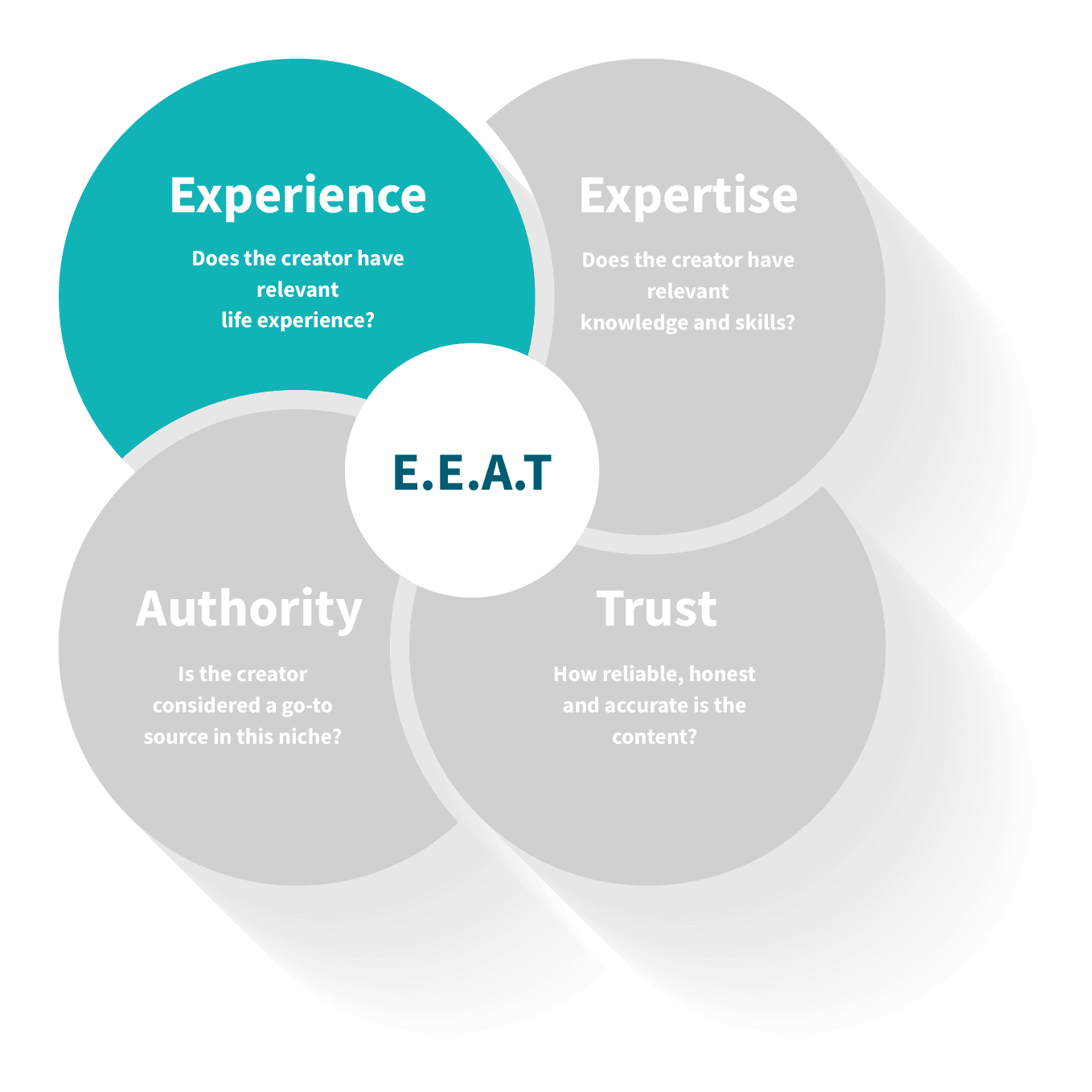
'Expertise' is one of the most important signals for any life science website design and content development project. In biotech, your audience expects scientific rigour. Website visitors want to see that your organisation understands the disease area, technology platform, discovery process or therapeutic application in depth.
But expertise should not mean impenetrable language. A biotech business website needs to translate complex science without diluting it. Your biotech website should provide technical audiences the detail they need, while helping commercial, investor and communications audiences grasp the bigger picture.
This can be achieved through:
- clear science website pages
- well-structured technology explanations
- leadership biographies
- publications
- posters
- white papers
- case studies
- carefully written news updates.
- copywriting for your biotech website

all of which should be precise, accurate and audience-aware. Written content should avoid vague claims and instead use confident, evidence-led language that reflects the strength of your work.
For early-stage biotech companies, this may involve explaining the platform's potential and the scientific rationale. For biotech businesses that are scaling, it may involve clarifying pipeline progress, partnerships, IP position and commercial direction. For established organisations, it may mean refining messaging so that a growing biotech company still feels focused, credible and easy to understand.
Authority: build confidence through proof
'Authority' is earned through substance. A polished visual and brand identity helps, but authority comes from the signals that show your biotech company is active, recognised and relevant within its field.
This might include peer-reviewed publications, clinical trial information, research collaborations, grant funding, conference presentations, patents, advisory board members, strategic partnerships and media coverage. When these elements are presented clearly, they help users see that your organisation has momentum and credibility.
As a specialist biotech marketing and web agency, we help you decide which proof points should be prominent, how they should be structured, and how to present them without making your biotech website feel cluttered. This is where digital strategy for biotech becomes especially valuable. It ensures that your messaging, design, content and SEO all work together to support your commercial goals.
'Authority' is also strengthened through consistency. Your website, pitch deck, conference materials, investor communications and social content should feel connected. When your biotech branding is cohesive, your organisation feels more mature, more memorable and more trustworthy.
'Authority' is particularly important in competitive sectors where multiple companies may be working in similar therapeutic areas or technology spaces. Clear positioning helps your audience understand not only what you do, but why your approach is distinct.
Trust: make every detail reassuring
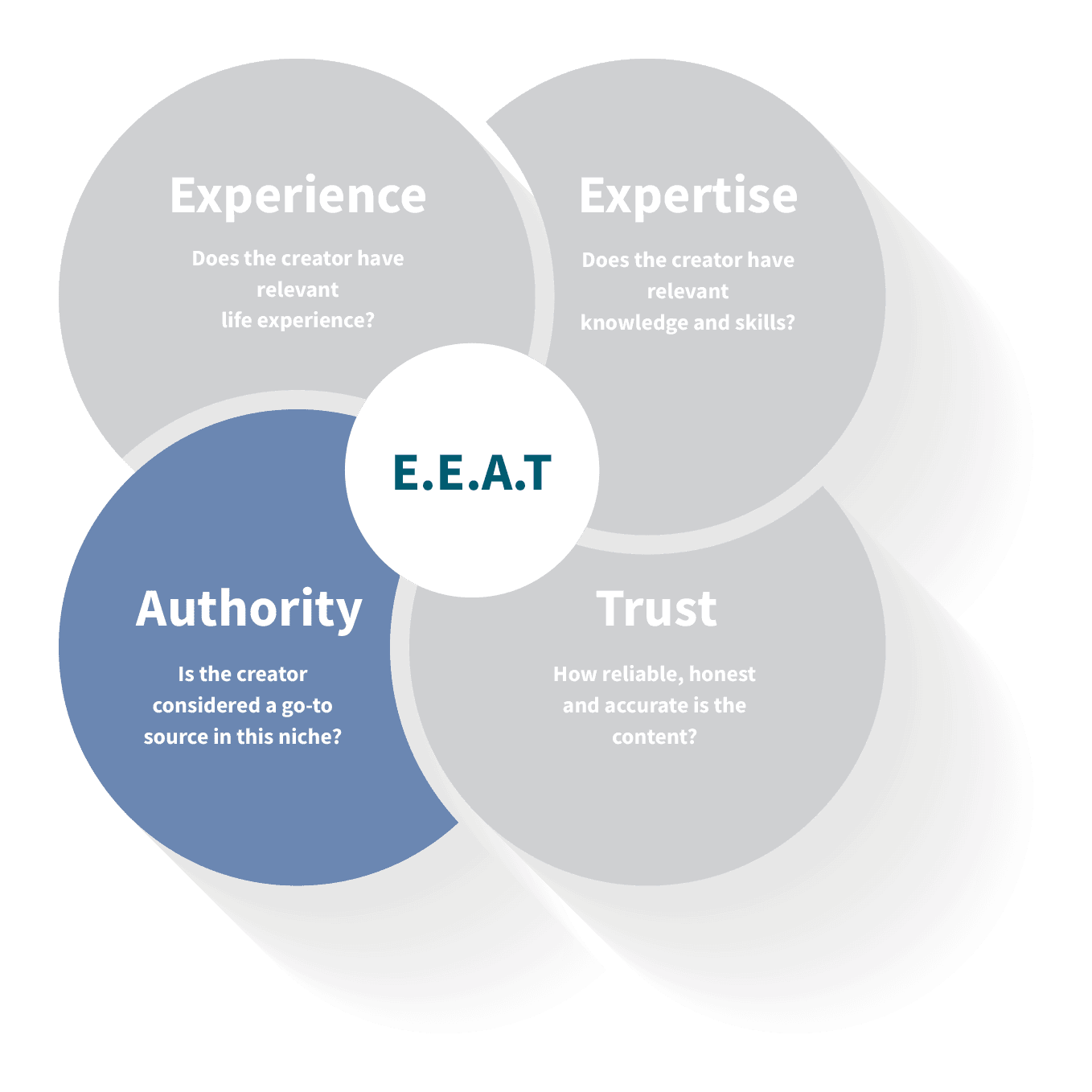
'Trust' is built through details. It’s in the clarity of your navigation, the quality of your writing, the credibility of your imagery, the accuracy of your claims, the visibility of your team and the professionalism of your web design.
For biotech websites, trust also depends on transparency. Visitors should be able to find essential information quickly. They should understand your leadership structure, scientific focus, development stage and contact routes. If your company is investor-facing, users should be able to access relevant updates and materials. If your work involves clinical trials, users need clear signposting to appropriate, compliant information.
Google’s search quality framework places particular importance on trust, especially for topics that can affect health, finance or safety. Biotech and life sciences content often touches on these areas, making accuracy and responsibility essential.
'Trust' also has a visual dimension. Innovative biotech web design should feel contemporary, but never gimmicky. The web design needs to reflect the sophistication of the science while remaining accessible and human. Typography, colour, spacing, diagrams, animation and imagery all contribute to how credible your organisation feels.
The best biotech websites are not necessarily the loudest. They are the clearest. They give audiences a sense of confidence, momentum and reassurance.
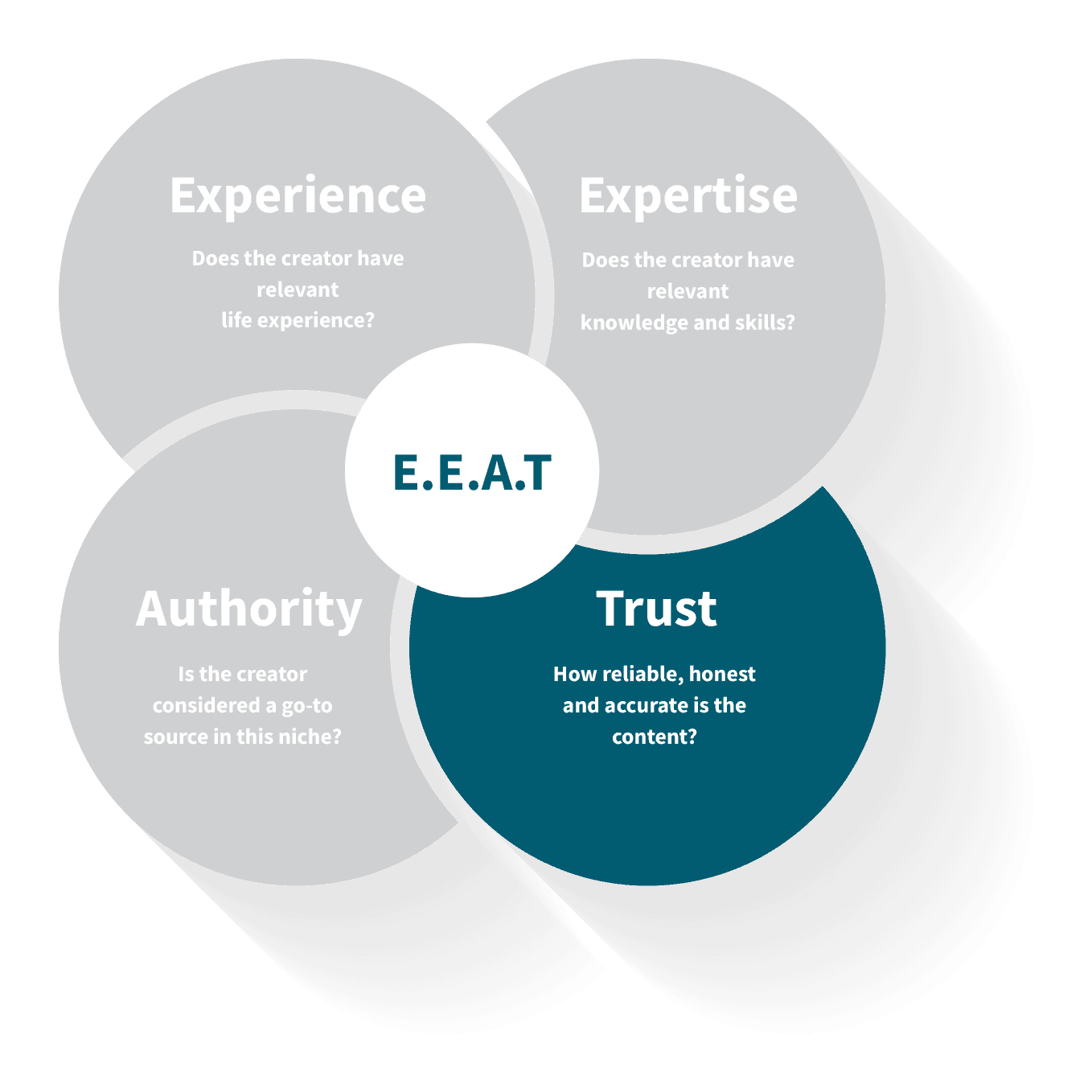
E-E-A-T and biotech SEO
E-E-A-T is also closely linked to biotech SEO. If your organisation wants to improve visibility for specific biotech SEO and AI terms in overviews.
That means building web pages around audience needs, not just search terms. A web page about your platform should clearly explain the science. A blog article should share meaningful insight. A service or product web page should help users understand the value, evidence and next step.
Biotech digital marketing works best when grounded in clarity. Search engines are becoming better at identifying thin, generic content. Your audience is already good at spotting it. Strong content should demonstrate real knowledge, original perspective and a clear understanding of the sector.
For biotech companies, this creates an opportunity. By investing in high-quality content, thoughtful website structure and credible storytelling, you can improve both search visibility and user confidence.
Creating a biotech website that reflects your scientific ambition
Your biotech website should reflect the quality of your work. If your science is advanced, your digital presence should feel equally considered. If your team is ambitious, your biotech brand should help you speak with confidence. If your company is preparing for investment, partnership or growth, your website should support that next stage.
Working with a specialist biotech web agency helps you shape a website that is scientifically accurate, strategically focused and creatively distinctive. It brings together design, messaging, content, user experience and technical development, not as separate tasks, but as one coherent expression of your organisation.
Experience, Expertise, Authority and Trust are not just SEO concepts. They are the qualities your biotech website needs to embody if it is to help people believe in your science, understand your value and take the next step.
In a sector where progress depends on confidence, clarity is powerful. And the right website can give your innovation the platform it deserves.

Human-made, people first
Creating helpful, reliable, people-first content means writing for the real people you want to reach, not simply for search engines. For biotech websites, that means developing content that answers your audience’s questions clearly, explains complex science with care, and supports every claim with accuracy and context. Investors, collaborators, clinicians, researchers and potential partners need to understand not only what you do, but why it matters and why they should trust you.
People-first content avoids vague statements and generic marketing language. Instead, it provides useful insight, demonstrates genuine expertise, reflects real-world experience and helps visitors take the next step with confidence. When your biotech website is built around clarity, relevance and trust, it becomes more valuable for users and stronger for SEO and AI search.
Your questions answered.
How to strengthen E-E-A-T across your biotech website
#1 What are the first practical steps to audit or improve our current website for E-E-A-T?
Start by looking at your website through the eyes of your main audiences. Can investors, collaborators, researchers, clinicians or potential partners quickly understand who you are, what you do, why your science matters and why they should trust you? Review your core pages first, including your homepage, technology or platform pages, team profiles, publications, news, case studies and contact pages.
Check whether your claims are specific, accurate and supported by evidence. Look for missing trust signals, such as leadership biographies, scientific advisors, partnerships, funding news, clinical or research milestones, publications, conference presentations and clear company information. It’s also useful to review the structure of your content.
Strong E-E-A-T depends on clarity as much as detail, so your website should guide people through complex information in a calm, logical and reassuring way.
#2 How can we measure whether our website is successfully building trust and authority with key audiences?
Trust can feel intangible, but there are practical ways to measure whether your website is doing its job. Start with your Google Analytics: look at engagement on important pages, time on page, scroll depth, returning visitors, content downloads, enquiry form submissions, investor pack requests, newsletter sign-ups, and event or webinar registrations.
Search performance is also valuable. If your website is gaining visibility for relevant biotech, life science, healthcare SEO or scientific topics, this suggests that your content is becoming more useful and discoverable.
Qualitative feedback matters too. Ask investors, partners, customers, internal teams and new contacts whether the website helped them understand your proposition.
If people arrive at meetings with a clearer grasp of your science, your positioning and your credibility, your website is helping to build authority before the conversation begins.
#3 What criteria should we use to choose a specialist biotech web agency or marketing partner?
Choosing the right agency is about more than finding a team that can design an attractive website. Biotech businesses need a partner that understands complex science, technical audiences, long sales cycles, funding pressures and the importance of accuracy. Arttia Creative, your specialist biotech web and marketing agency, has relevant sector experience, strong strategic thinking, clear project processes and the ability to translate scientific detail into compelling digital communication.
Review our previous work to confirm whether we can support messaging, website design, development, SEO, content creation and ongoing digital marketing.
A good partner should be able to challenge constructively, protect clarity, respect compliance requirements and make the process easier for your team. Most importantly, we will help you communicate with confidence.
#4 How do we source or generate real-world experience and case studies to build strong content?
Real-world experience is often already present within your organisation; it simply needs to be uncovered, structured and translated into useful content. Start by speaking with the people closest to the work: scientists, product specialists, founders, clinical teams, commercial leads, customers, collaborators and technical support teams.
Their first-hand insights can reveal common challenges, practical applications, development stories, implementation lessons and evidence of impact.
These can become case studies, application notes, interview-led articles, product explainers, white papers, FAQs or conference content. Where confidentiality or IP protection is important, case studies can be anonymised or focused on the problem, process and outcome rather than sensitive detail.
Strong biotech content marketing turns lived experience into credible, helpful communication.
#5 How do we ensure our website content remains compliant with industry regulations and privacy standards?
Compliance should be built into the website process from the beginning, not added at the end. Establish clear internal review workflows so that scientific, regulatory, legal and marketing teams all understand their role in approving content. Be careful with claims, especially those related to performance, clinical outcomes, product availability, diagnostics, therapeutics or patient impact. Every statement should be accurate, appropriately qualified and supported by evidence where needed. Privacy is equally important, particularly if your website collects enquiries, newsletter sign-ups, requests for downloadable resources or event registrations. Make sure your privacy policy, cookie notices, consent processes and data handling practices are up to date and aligned with relevant standards. A specialist healthcare or biotech digital agency can help create content and website structures that feel clear and engaging while staying on the right side of regulatory, ethical and privacy expectations.

The Takeaway.
Ready to strengthen your biotech website?
Your biotech website should provide people with confidence in your science before they’ve even spoken to you. If it feels unclear, outdated or too complex for your audiences to navigate, it may be holding back valuable conversations with investors, partners, collaborators and customers.
At Arttia Creative, we help biotech and life science organisations turn complex innovation into a clear, credible and engaging website design. From messaging and biotech branding to website design, development, SEO and content, we’ll help you build a website that demonstrates your expertise, strengthens your authority and earns trust from the people who matter most.
If you’re planning a new biotech website, refreshing an existing one, or preparing for your next stage of growth, let’s talk.

Belinda White | Creative Director